

If you own investment property in Texas and you're looking at a sale, there's a tax strategy worth understanding before you sign anything: the 1031 exchange. It won't work for everyone, but for the right investor, it can mean keeping significantly more capital working for you instead of handing a chunk of it to the IRS.
What Is a 1031 Exchange?
Named for Section 1031 of the tax code, this rule lets you sell an investment property and roll the proceeds into another investment property without paying capital gains tax right away. The tax isn't eliminated — it's deferred, pushed down the road as long as you keep following the rules.
Three requirements matter most:
The properties must be "like-kind." In practice, this is broader than it sounds — you could trade a rental house for a commercial building, since both are held forinvestment or business purposes. What doesn't count is swapping into a personal residence.
You're on a clock. You have 45 days after selling to name potential replacement properties, and 180 days total to close on one of them.
A middleman has to hold the money. The IRS requires a qualified intermediary to hold your sale proceeds. You can't touch the cash yourself during the process, or you lose the tax deferral.
Why Texas Is a Good Fit for This Strategy
Texas doesn't have a state capital gains tax, so unlike an investor in California or New York, you only have to plan around the federal tax bill. That alone simplifies the math considerably.
You've also got a wide range of eligible property types to work with — single-family rentals, commercial buildings, land, multi-family units, industrial properties. The one carve-out: a primary home or vacation house generally doesn't qualify unless it meets narrow IRS safe-harbor conditions.
And because Texas has such an active investment property market with no state income tax pulling against it, finding a replacement property in that 45-day window tends to be a bit easier here than in slower markets.
What You Stand to Gain
- More capital working for you. Deferring a tax bill that could run up to 20% federally means all of your sale proceeds go straight into the next property.
- Room to pivot. You can use an exchange to move from, say, single-family rentals into multi-family or commercial — reshaping your portfolio instead of staying locked into what you started with.
- Compounding growth. More capital deployed now generally means more cash flow and appreciation building over time.
- A cleaner handoff to heirs. If you hold an exchanged property until death, heirs typically get a stepped-up basis, which can wipe out the deferred tax liability entirely.
- Flexibility to consolidate or expand. Trade several smaller properties for one larger asset, or spread proceeds across multiple properties — the exchange works either direction.
Where It Can Go Wrong
- The deadlines are unforgiving. Miss the 45-day or 180-day mark and you're looking at a full tax bill, no extensions.
- Competition for properties. A hot Texas market cuts both ways — it's great for selling, but it can make finding the right replacement within your window genuinely difficult, yet the good part is you do not need to close first.
- "Boot" gets taxed. If you pull out any cash or reduce your debt load through the exchange, that portion — called boot — is taxable, even though the rest of the exchange isn't.
- Depreciation recapture still applies. Years of depreciation deductions come back to bite eventually; a 1031 exchange defers this too, but it doesn't erase it.
- Personal-use property is mostly off the table, absent specific IRS structuring.
The Basic Process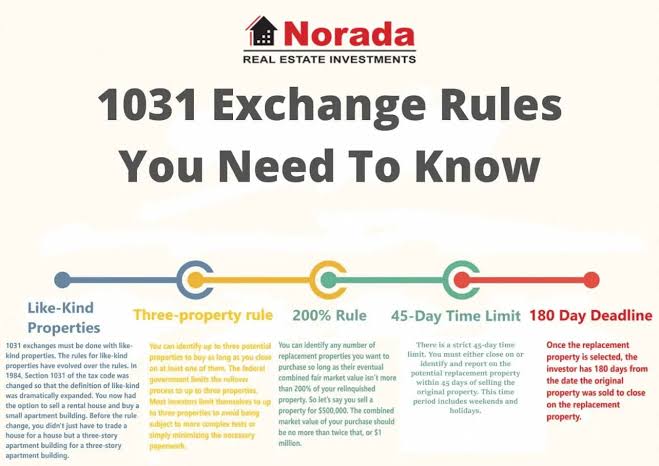
- Talk to a CPA or tax advisor first to see if this actually fits your situation.
- Line up a qualified intermediary before you sell — this has to be in place ahead of the sale.
- Sell your current property through a real estate agent as you normally would.
- Within 45 days, put your replacement property candidates in writing (up to three).
- Close on the replacement within 180 days of your original sale.
- File IRS Form 8824 with your tax return to document the exchange.
Bottom Line
A 1031 exchange isn't a loophole — it's a well-established, IRS-sanctioned tool for investors who want to keep growing their portfolio without a tax bill interrupting the momentum. Texas's lack of a state capital gains tax makes it a particularly favorable place to use one. That said, the timelines are strict and the rules have real teeth, so this isn't a DIY project. Loop in a tax advisor, a real estate attorney, and a qualified intermediary before you get moving.
Disclaimer: The information provided in this website and our blogs is for entertainment purposes and general information, and is not intended for legal or financial advice. While we endeavor to provide the latest information on a particular subject, future changes to the source Information is beyond our control. We strongly urge that you seek competent professional counsel from an attorney, CPA or tax consultant that is familiar with this subject.
MEMORIAL DAY MEANS MORE THAN A THREE-DAY WEEKEND!